

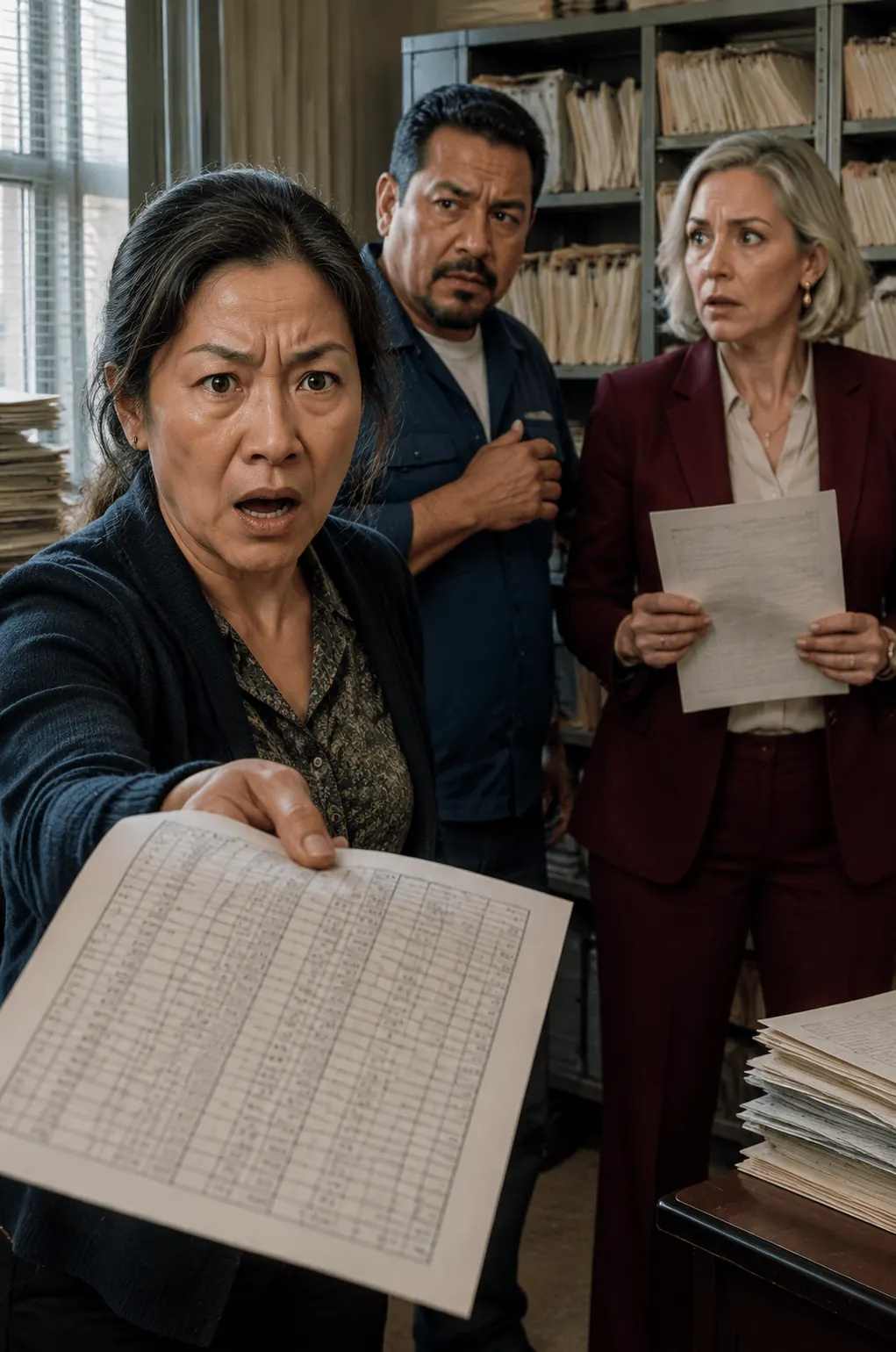
The Ledger in Her Name
Chapter 1
The Notice
The man waited until the memorial’s last paper lantern had guttered before he said Mara Chen’s name.
Her father’s clinic was full of folded chairs, cooling tea, and people trying to leave without looking like they were leaving. Mara stood beside the donation jar with a stack of sympathy cards pressed against her ribs. Across the room, Leon was carrying empty trays toward the kitchen, shoulders bowed in the old building’s fluorescent light.
“Ms. Chen?” The man wore a rain-dark coat and no expression. “You have been served.”
The envelope was thick enough to feel expensive. Her name had been typed in careful black letters. Inside lay a demand for four hundred and eighty thousand dollars, due in forty-eight hours, plus a copy of a promissory note allegedly signed by Mara two months earlier.
She read the signature twice. The M leaned too hard into the a. The final stroke of Chen cut upward like a question. It looked exactly like her hand because someone had practiced it.
“This is fraudulent,” she said.
“Vantage Recovery will discuss resolution.” The man glanced toward the clinic’s frosted glass door. “Tomorrow. Nine.”
Leon crossed the room after the man had gone. His face changed when he saw the number, then changed again when he saw that Mara had noticed.
“Dad didn’t owe anybody that,” she said.
“Dad owed plenty of people.” Leon reached for the papers. “Give me those.”
Mara held them out of reach. Since their father’s stroke, Leon had repaired boilers, collected rent, answered residents’ midnight calls. Mara had balanced payroll and supplied the calm voice. Neither role had included this.
At the bottom of the note, below her counterfeit signature, was a line that made the room narrow around her: collateral assigned from the Chen Community Housing Trust.
The clinic was not collateral. It was the last thing their father had built that still had his name on it.
“What did you do?” Mara asked.
Leon looked toward the kitchen, where the faucet was running though no one stood beneath it. “I bought us time.”
Her phone vibrated before he could say more. Unknown number. One message.
Bring the original ledger tomorrow, Mara. Your father hid it from the wrong people.
Mara read the notice again and circled the deadline. Forty-eight hours was not a legal period; it was a threat disguised as administration. She called the number printed beneath the seal and asked for the clerk who had signed it.
“The clerk is unavailable,” a man answered.
“Then give me your name.”
The line went silent. Mara saved the call and photographed every page. The notice claimed she had inherited a debt attached to a company she had never owned. It listed her father as guarantor, though his signature had been declared invalid after his death.
She went to the county archive before closing. The archivist recognized the file and lowered her voice. “Someone requested it this morning.”
“Who?”
“A lawyer from Calder Holdings.”
Mara knew Calder Holdings. It owned the apartments where her neighbors lived and the clinic where her mother received treatment. She asked for the access log. The archivist hesitated until Mara explained that a missing log could become evidence of alteration.
The log named Elias Vane, Calder’s chief auditor. His signature appeared beside the request. Mara found him in the lobby, standing beneath a portrait of her father.
“You came for the ledger,” Elias said.
“I came for the record you are trying to replace.”
He offered to settle the debt privately. Mara refused. He offered a payment schedule. She asked why the schedule included a company account she did not recognize. His expression tightened.
“Your father left obligations.”
“Then show me the contract.”
Elias produced a copy. The final page carried a handwritten amendment dated after her father’s funeral. Mara compared the ink with the signature on the notice. They were made by the same person.
She left the archive with the copy hidden inside her coat and sent scans to a consumer-rights attorney. At home, a black sedan waited across the street. A neighbor told her two men had asked which apartment belonged to Mara Quinn.
Mara entered through the rear stairwell, checked the locks, and opened her father’s old tool chest. Beneath a rusted wrench lay a brass key stamped with a number. She called the archivist.
“What does storage unit 19 mean?”
“The old courthouse basement.”
Mara took the key and a flashlight. The basement smelled of dust and wet stone. Unit 19 opened onto a metal box containing receipts, a cassette recorder, and three pages from a ledger. Every payment was marked with a code. The newest entry carried Leon’s employee number.
Leon was the man who had offered her a job that morning and warned her not to fight Calder. Mara played the cassette. Her father’s voice said, “If they deliver the notice, they are already afraid of what the ledger proves.”
Footsteps sounded above. Mara switched off the light and held her breath. Someone tried the basement door, then called her name.
She put the ledger pages inside her bag and opened the emergency exit. The alarm began to ring. Outside, her phone displayed a message from Elias: COME ALONE TOMORROW, OR YOUR MOTHER LOSES HER APARTMENT.
Mara forwarded the threat to her attorney, then looked at the brass key in her palm. The notice had started as a demand for money. Now it was a fight over who owned the truth. She set an appointment with Elias, carrying a recorder and a copy of every page.
Before dawn, another message arrived. It contained a photograph of Leon entering Calder’s private office and one instruction: ASK HIM WHO SIGNED THE FIRST DEBT.
Mara printed the photograph at the twenty-four-hour pharmacy and wrote the time on its back. She placed it beside the notice, the key, and the recorder. By morning, she had four copies stored in four different places. If one vanished, the others would remain.
Her mother called from the clinic. Mara answered with a calm voice and promised to visit after work. She did not mention the threat. Fear could be shared later; evidence could not.
At seven, Elias sent the meeting address. It was the private conference room of the building where her mother lived. Mara understood the choice he was forcing. She could protect one person by entering his room alone, or she could make the room public before she arrived.
She emailed the notice to three reporters and set the message to release automatically at noon. Then she put on her coat, secured the recorder beneath her collar, and walked toward the elevator. The elevator mirror reflected a woman who looked prepared, though her hands were cold. Mara pressed the recorder once to make sure its light remained dark. Then the doors opened on the lobby, where Elias waited beside the building manager.
Before she crossed the lobby, Mara ducked into the clinic’s supply room and called her attorney, Priya Shah. The call connected on the fourth ring. Priya listened without interrupting while Mara described the red wax, the photograph of Leon, and the threat against her mother. When Mara finished, Priya asked her to name one person who knew where each copy of the evidence was stored.
“No one,” Mara said. “I did not trust anyone enough.”
“Then trust a system,” Priya replied. “Send me the access codes and a timeline. If you disappear for even an hour, I file the injunction without waiting for your permission.”
Mara opened a blank note and dictated the dates. Her voice shook at first, then steadied as the facts lined up. She added Leon’s employee number and the archive log. Priya stopped her at the mention of the cassette.
“Do not play that recording for Elias,” she said. “Not until we know whether your father named a witness. A voice can be challenged. A witness can force the court to listen.”
Mara looked through the supply-room window. Elias stood beside the elevator, checking his watch. The building manager kept glancing at the front doors, as if expecting someone else. She sent Priya the timeline, then placed the phone on speaker so the attorney could hear the lobby if anything happened. It was a small protection, but it made the air feel less owned by the men waiting outside.
The manager held a second envelope, sealed in red wax. “This arrived for you five minutes ago,” he said.
Mara did not take it immediately. “Who delivered it?”
“A courier with no company badge.”
She photographed the envelope before accepting it. Her name was typed across the front, but beneath it someone had written a second line by hand: Open only after you hear what Elias signed.
Elias glanced at the message and lost the careful expression he had worn in the archive. That was enough to tell Mara the meeting had already changed. She slipped the envelope into her bag, kept the recorder beneath her collar, and stepped between the two men.
“We are going upstairs,” she said. “And this time, every door stays open.”