

The Wife in the Archive
Chapter 1
The Frame That Changed
Mara Ellison knew a family recording was wrong when the dead man in it moved his hand twice.
Daniel sat at the end of their kitchen table in the clip, laughing at something outside the frame. It was the year before his diagnosis. Rain feathered the windows. June was arguing with the kettle. Mara, younger by only eighteen months and careless enough to believe the camera forgot nothing, crossed behind Daniel with a plate of peaches.
In the original, Daniel lifted his left hand to catch the plate when it slipped. Mara remembered the bruise on his thumb. In the playback, his hand stayed flat on the table until the plate had passed him. Then, for a fraction of a second, it was raised again.
She backed the file up one frame.
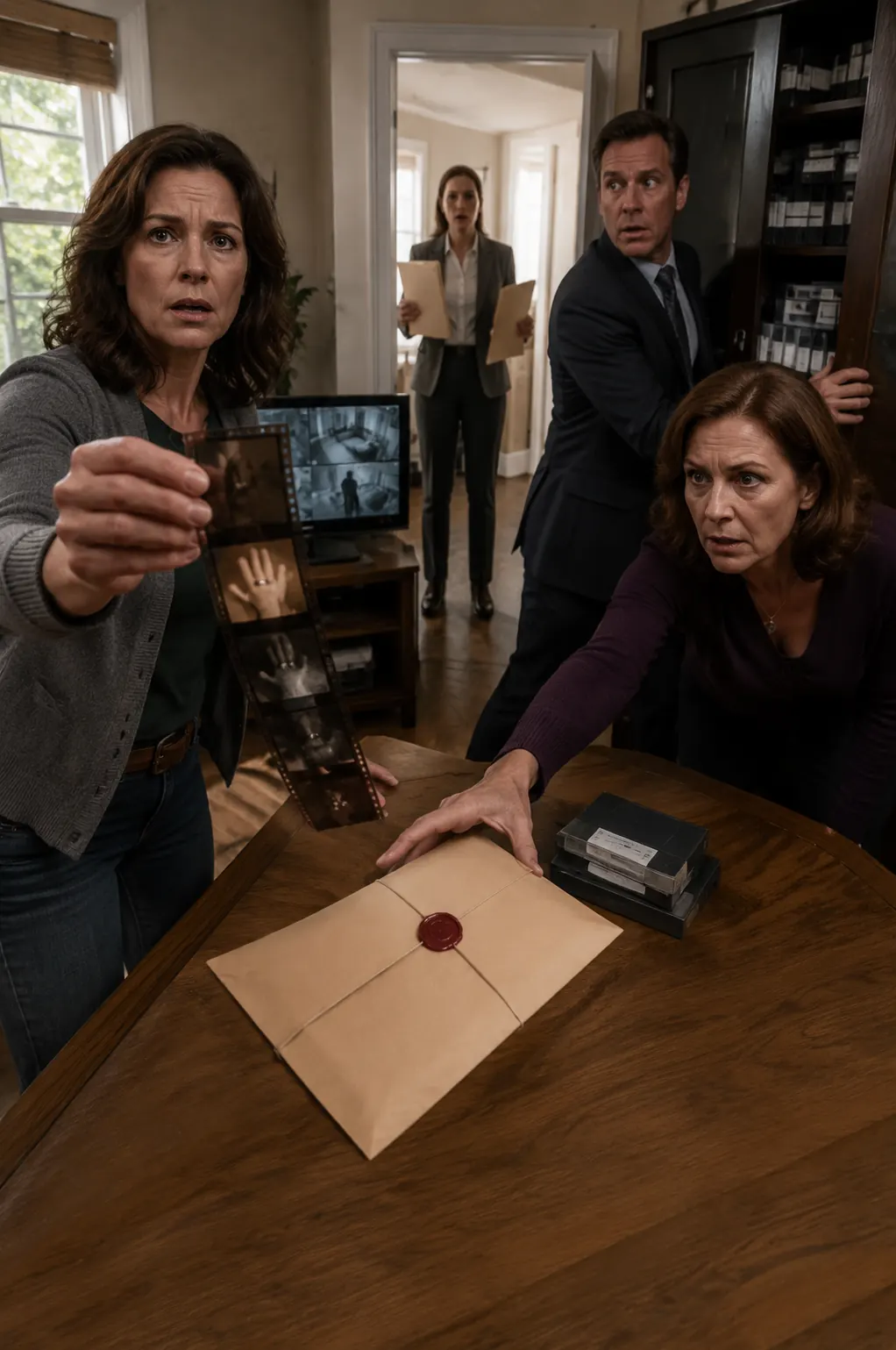
The first hand was real: thumb bruised, wedding ring dull at the edge. The second was clean. The ring gleamed where the kitchen light never reached. On the counter behind him, a thin gray banner appeared across the image.
FAMILY CONTINUITY: PARTICIPANT CONSENT CAPTURED.
Mara's own voice came from the speakers.
“I authorize Hearthwell Memory to preserve, organize, and continue access to our family materials.”
She did not recognize saying it. That was not the same as saying she had not. An archivist learned early not to confuse certainty with recollection. But the cadence snagged in her throat. The tiny pause before continue access belonged to an old recording of her wedding vows, when Daniel had squeezed her fingers beneath the table.
The front door opened downstairs.
“Mara?” Tessa called. “Owen's here. We need the media inventory signed before lunch.”
Mara stopped the screen. The office became ordinary again: labeled cartons, lintless gloves, a mug of coffee abandoned beside the scanner. Daniel had died eleven days earlier. Every object seemed to arrive carrying a different claim on her. His sister wanted the house cleared. His attorney wanted every asset described. The county wanted the death certificate. And Mara wanted one quiet hour in a room where no one had decided that grief made her slow.
She opened the file properties. The video had been ingested six years ago from a MiniDV tape. Its source hash matched her catalog. Its export date was this morning, 8:14 a.m.
No one should have been exporting it.
She copied the hash to an offline drive and went downstairs with her laptop closed against her ribs. Tessa Vale stood in the hall in a navy coat, holding a stack of folders too neatly. Owen Rusk had the careful face of a man who billed by the quarter hour and never moved his own chair.
“The court accepted the expedited calendar,” he said. “The house and archive need to be ready for sale in five days.”
“Sale?” Mara asked.
Tessa's eyes flicked to the media-room door. “Daniel's debts were larger than we thought.”
“The house is ours.”
“It is the estate's,” Owen corrected, gently enough to make the correction feel rehearsed. “And there are data licenses attached to the archive. A buyer is interested in the whole package.”
Mara set the laptop on the hall table. “Who has access to the server?”
“You do,” Tessa said. “Daniel did. Now the executor does.”
“Did you export any family recordings today?”
Tessa looked honestly blank. Owen did not look blank; he looked patient. “Why would that matter?”
Mara opened the screen, but the gray banner had vanished. The frame now showed Daniel's bruised thumb in the only position it had ever occupied.
For a breath she hated herself. Then she checked the offline drive. Its copy still held two versions of the same frame.
Owen placed a folder in front of her. “There is a consent schedule attached to Daniel's estate plan. You may have signed it during his treatment.”
On the final page, beside a digital signature resembling hers, a status line glowed green.
Verification method: voice match. Authorized twice.
Mara looked at the phrase until it stopped behaving like language.
Mara photographed the envelope before opening it. The key inside carried a blue archive tag and a number absent from Daniel’s catalog. The solicitor offered to postpone the deadline if she surrendered it. She put the key back.
“Five days is enough,” she said. “If you stop moving things.”
Tessa contradicted the inventory from the doorway. Three boxes were missing, and the movers had been given a destination different from preservation. Mara called Felix, the archivist Daniel trusted, and asked him to bring a camera and blank inventory sheets. The house was being dismantled, but she could still decide which objects left a record.
When Felix arrived, the key warmed against Mara’s palm. From behind the media-room wall came one deliberate knock. She looked at the altered photograph. The dead man in it had moved his hand again.
Mara opened a paper notebook and recorded the discrepancy in the form she used for damaged family collections: object, condition, location, observed anomaly, people with access. Her pencil pressed hard enough to dent the page. She wrote that the export had appeared after Daniel died, that the source hash did not explain the second hand, and that the consent banner used her voice without a known session. The act did not make the house safer. It made the moment harder to take away from her. When Tessa asked whether she was finished, Mara said she was only beginning. She photographed the screen with her phone, then photographed the photograph as it appeared on the offline drive. Every copy had a date. Every date was a witness. In the kitchen, one of the movers asked where to put the next carton. Tessa answered automatically. Mara listened to the ordinary sentence and understood that the house was being dismantled while someone inside it rewrote the terms by which she could object. Mara opened a paper notebook and recorded the discrepancy in the form she used for damaged family collections: object, condition, location, observed anomaly, people with access. Her pencil pressed hard enough to dent the page. She wrote that the export had appeared after Daniel died, that the source hash did not explain the second hand, and that the consent banner used her voice without a known session. The act did not make the house safer. It made the moment harder to take away from her. When Tessa asked whether she was finished, Mara said she was only beginning. She photographed the screen with her phone, then photographed the photograph as it appeared on the offline drive. Every copy had a date. Every date was a witness. In the kitchen, one of the movers asked where to put the next carton. Tessa answered automatically. Mara listened to the ordinary sentence and understood that the house was being dismantled while someone inside it rewrote the terms by which she could object.
“Twice?” she asked.
Daniel nodded toward the frame. A second backing held an envelope addressed to the wife everyone believed had died. Inside lay a key and dates that matched removals from the family ledger. The housekeeper announced the solicitor. A man in gray waited in the hall. “You have until Friday to vacate,” he said. Elise hid the envelope in her coat and looked at the altered photograph. “Then you should start counting.”